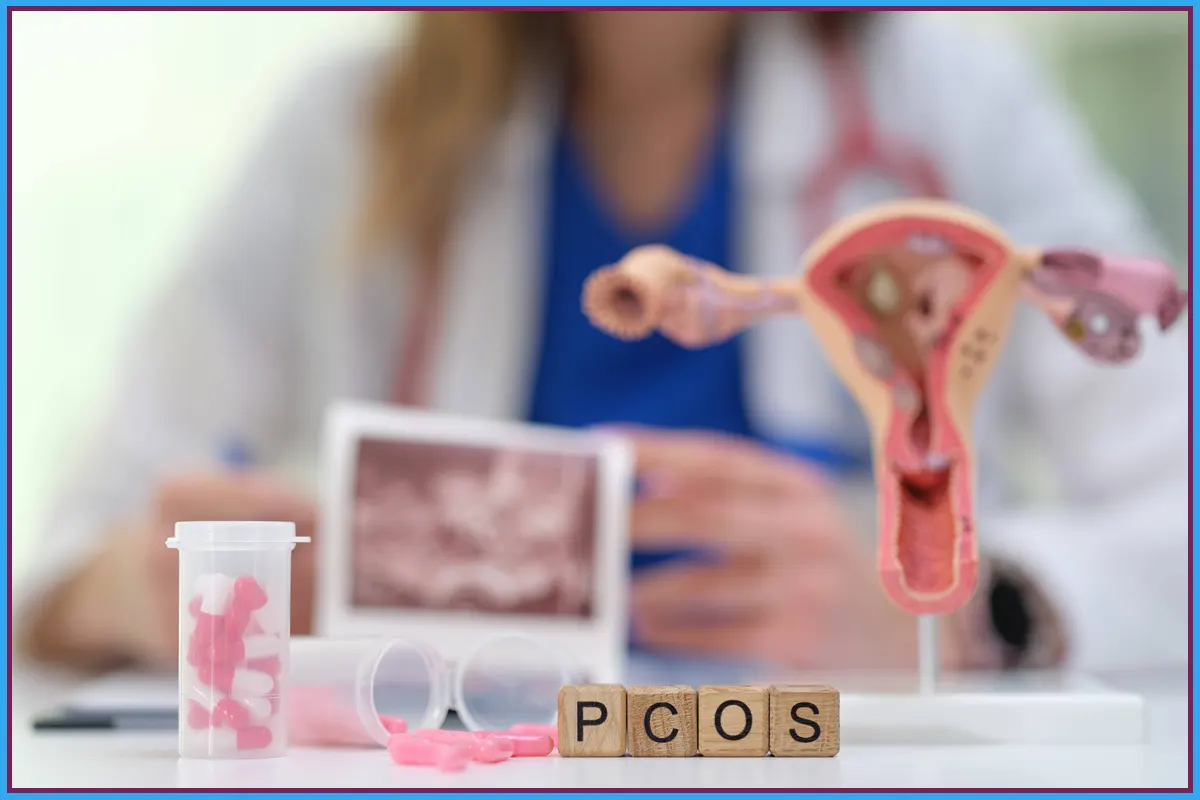
PMOS is a common hormonal condition affecting women of reproductive age and is one of the leading causes of female infertility. If you’re experiencing PMOS symptoms or facing difficulty conceiving, timely diagnosis and the right treatment can help manage symptoms and improve pregnancy outcomes. In this blog, we discuss what Polyendocrine Metabolic Ovarian Syndrome is, its symptoms, causes, and treatment options, as well as the link between PMOS and fertility.
What is PMOS?
PMOS or Polyendocrine Metabolic Ovarian Syndrome is a condition in which your ovaries create excessive male hormones (androgens). Women, too, produce androgens, but in a much smaller amount than men. The ovaries of women with PMOS create excess androgens which can cause small sacs of fluid to develop on the ovaries.
These immature follicles fail to release an egg during ovulation. They aren’t painful but can interfere with ovarian function.
PMOS affects everyone differently. Obesity and weight gain are one of the most prominent factors of PMOS, but not all PMOS patients are obese. In lean PMOS, patients have a healthy BMI but still display other symptoms of PMOS. Women with mild PMOS may only show two or three symptoms, and might only require treatment to prevent long-term complications.
If left untreated, PMOS can cause severe health issues that increase your risk for serious, long-term health problems like Type 2 diabetes, heart disease (high blood pressure, cholesterol), infertility, sleep apnea, fatty liver disease, and even endometrial cancer.
Causes and Risk Factors of Polyendocrine Metabolic Ovarian Syndrome
The exact cause of PMOS is currently unknown. A study in the Fertility and Sterility Journal by the American Society For Reproductive Medicine calls PMOS an “ancient disorder” that may be a genetic trait evolved to promote fertility in harsh conditions. Current evidence supports that PMOS (previously PCOS) is a metabolic disorder that affects the endocrine system.
Currently, we know that there are three factors linked with PMOS: high androgen levels, insulin resistance, and inflammation.
High Levels of Androgens
PMOS can occur when your ovaries produce excess androgens. High androgen levels can cause infertility and other symptoms.
Insulin Resistance
Your body may be resistant to insulin, which increases blood sugar levels and makes the ovaries release more androgens. Insulin resistance can cause obesity and increase your risk for Type-2 diabetes.
Chronic Low-Grade Inflammation
A chronic inflammatory state can increase androgen production, and is found in many people who have PMOS. Blood tests for C-reactive protein (CRP) and A1C can help assess chronic inflammation and metabolic dysfunction.
Genetics
PMOS often runs in families, which suggests that there’s a genetic link there. Doctors will often ask if any of your family members have PMOS while making a diagnosis.
Signs and Symptoms of PMOS
The symptoms of PMOS usually start when a girl gets her period for the first time. Other women may develop these symptoms at any time after puberty. These are some of the most common symptoms of Polyendocrine Metabolic Ovarian Syndrome:
Irregular Periods
PMOS can affect ovulation and make your periods irregular. You may deal with missing periods or stop having a period completely.
Sudden Weight Gain/ Obesity
Women with PMOS often have insulin resistance, which makes it harder for them to lose weight. According to the Cleveland Clinic, 40% to 80% of PMOS patients are obese and have trouble getting to a healthier weight.
Presence of Immature Follicles
PMOS patients can develop immature follicles on their ovaries which can make ovulation difficult and interfere with their menstrual cycle.
Acne
PMOS can cause oily skin and stubborn, painful hormonal acne on your face and body which cannot be treated easily with regular anti-acne cosmetics.
Thinning Hair
The increased levels of androgens can make you experience male-pattern baldness. You may experience hair thinning and bald spots.
Abnormal Hair Growth
Testosterone causes baldness, but it also makes men grow thicker facial and body hair. Women with PMOS experience hirsutism, a condition with excessive hair growth on their face, arms, chest, and abdomen.
Dark Patches of Skin
You may find dark, velvety patches of skin (officially called acanthosis nigricans) on the folds of your neck, groin, armpit, and under your breasts.
Skin Tags
Skin tags are loose flaps of extra skin that may develop in your neck or armpit. They’re harmless and can be removed with cosmetic surgery, if you desire.
Not all women with PMOS experience symptoms. You could have PMOS and not even realise it until you start trying to conceive or start gaining weight suddenly. Some women have mild PMOS or lean PMOS, which can go unnoticed for longer.
Diagnostic Criteria For PMOS
To get a PMOS diagnosis, speak to your gynaecologist about your symptoms. Following the Rotterdam diagnostic criteria of PMOS, you must be diagnosed if you display at least two of these three symptoms:
Irregular or Missed Periods
Your periods are irregular and you have fewer periods per year (oligomenorrhea). You may experience very heavy bleeding during your period. Some women do not have any periods at all (amenorrhea).
Excess Androgen Levels
You display signs of excessive androgen levels (hyperandrogenism). These signs can include acne, hirsutism, or high androgen levels in a blood test.
Polycystic Ovaries
Immature follicles are visible on one or both of your ovaries.
Getting a PMOS Diagnosis
A PMOS specialist in Mumbai will discuss your symptoms with you, and ask if anyone in your biological family has PMOS. They may order tests to confirm your symptoms, which can include a physical check, a pelvic exam, a pelvic ultrasound, and blood tests.
Physical Exam
Through a physical exam, your specialist will examine your for any physical and symptoms of PMOS.
Blood Tests
Women with PMOS can have higher than average levels of testosterone, oestrogen, luteinising hormone, insulin, and anti-müllerian hormone. Your doctor may order blood tests to check your hormone levels and blood sugar levels.
Pelvic Exam
Your doctor may also conduct a pelvic exam to check for any swelling or growth of your ovaries.
Pelvic Ultrasound
Doctors can look for immature follicles on your ovaries with the help of a pelvic ultrasound. They can also check the size of your ovaries and the thickness of your uterine lining. PMOS can make your uterine lining thicker than normal, since it can build up due to missing periods.
PMOS Treatment Options
There is no cure for PMOS, so treatment focuses on providing relief from symptoms and treating their root cause. A specialist will take your medical history, health conditions, fertility goals, and PMOS symptoms into account while devising a treatment plan for you. Your treatment plan may include medication, lifestyle and diet changes, and very rarely, surgery.
Birth Control
Birth control pills lower androgen levels, which reduces symptoms like acne and can be used to regulate your menstrual cycle before you start trying to have a baby.
Progestin Treatment
Progestin therapy is an alternative treatment for PMOS patients who cannot take birth control for health reasons or because they are trying to get pregnant.
Ovulation Induction
Medications like clomiphene citrate, letrozole, and gonadotropins can stimulate ovulation and help the ovaries release eggs. They are usually prescribed to PMOS patients who want to conceive.
Laparoscopic Ovarian Drilling (LOD) Surgery
A laparoscopy surgery is a minimally invasive procedure in which a surgeon makes small incisions on your abdomen and conducts the surgery through them. This approach causes minimal scarring and makes recovery easier on the patient.
In laparoscopic ovarian drilling, a surgeon removes some tissue that produces androgens from your ovaries to help restore ovulation. Surgery is not usually recommended for PMOS patients, as their symptoms can often be managed through medication and lifestyle changes.
Diet and Lifestyle Changes
Diet and lifestyle changes are often the first treatments given to PMOS patients. When you exercise regularly and eat food that doesn’t spike your glucose levels, your body has an easier time using insulin properly and you’ll begin to ovulate regularly.
Insulin Sensitizing Medications
Certain medications like Metformin can be used to lower insulin production and androgen levels in the body. This can regulate ovulation.
Anti-Androgen Medication
These medications lowers the effects of androgen on your hair and skin, and can effectively target PMOS symptoms like oily skin, stubborn acne, and excessive hair growth.
PMOS and Fertility: How PMOS Affects Ovulation
PMOS doesn’t mean infertility. Many women with PMOS can become pregnant and conceive with their own eggs. If you’re seeking IVF for PMOS with high success rates, book a free consultation at a Bloom IVF clinic near you.
PMOS makes your ovaries produce more androgens than it usually would, which disrupts your hormonal balance.
Irregular or Absent Periods
The female reproductive needs the hormone levels to remain in balance. When that doesn’t happen, women with Polyendocrine Metabolic Ovarian Syndrome often experience irregular periods.
No Ovulation
Your ovaries release a mature egg every month, and this is called ovulation. This egg then moves down a fallopian tube, and if it comes across a sperm, fertilization takes place. Ovulation affects fertility directly—if your body doesn’t release eggs, you can’t get pregnant (at least, without medical intervention). PMOS can make your ovulation irregular or stop it completely.
Immature Follicles on the Ovaries
When ovulation is disrupted, your body doesn’t release an egg each month like it’s supposed to. These small, fluid filled follicles (egg containing sacs) can build up in the ovaries and may affect ovulation and egg quality.
Can I Become Pregnant With PMOS?
Yes, you can become pregnant even if you have PMOS. The right PMOS infertility treatment options can resolve infertility caused by PMOS and help you become pregnant in the future.
Pregnancy with PMOS has a higher risk of miscarriage, preeclampsia, gestational diabetes, and premature birth. Timely medical monitoring and PMOS treatment by skilled fertility specialists can help you prevent complications during pregnancy and birth. Write to us at info@bloomivf.com for more information about how we monitor pregnancy in women with PMOS.
IVF and Advanced Fertility Treatments for PMOS
PMOS can cause irregular ovulation, loss in egg quality, and hormonal imbalances that make conception difficult. Conventional fertility treatments like timed intercourse and IUI may not prove effective in such cases. As a result, many patients with PMOS require advanced fertility treatments to become pregnant.
Women who cannot ovulate or find it difficult to conceive even with the help of other treatments may be recommended in vitro fertilization treatment. In IVF, eggs are retrieved from the ovaries and fertilized with sperm from a donor or partner. The fertilized embryos are then transferred directly to the woman’s uterus, where it attaches itself to the uterine lining and grows into a baby.
Women with PMOS can sometimes have low egg quality which makes them unable to carry a pregnancy using their own eggs. Your fertility specialist may try to improve poor egg quality with vitamins, supplements, and medication.
Success Rates at Bloom IVF
PMOS treatment can help women treat their symptoms like menstrual irregularities, acne, and excess hair growth, which significantly improves their quality of life. Early diagnosis and treatment can reduce future risks and complications, and help women with PMOS increase their fertility.
Infertility caused by PMOS is treatable through medication, surgery, and lifestyle changes. You can discuss your symptoms and fertility goals with an experienced fertility specialist at Bloom IVF for a customized treatment plan.
Bloom IVF offers affordable, high quality treatment options for women with PMOS. Book a consultation at your nearest Bloom IVF Centre or seek a PMOS specialist in Mumbai for diagnosis and treatment of Polyendocrine Metabolic Ovarian Syndrome.
Frequently Asked Questions:
Can PMOS be genetic?
Yes, PMOS can run in families. If your biological parent or relative has PMOS, you are more likely to be diagnosed with the condition.
What happens if PMOS is left untreated?
If left untreated, PMOS increases your risk of type-2 diabetes, heart disease, high blood pressure, sleep apnea, endometrial cancer, infertility, and fatty liver disease.
What are the symptoms of PMOS?
What are the symptoms of PMOS?
The signs of PMOS include irregular periods, acne, hirsutism, balding or thinning scalp hair, dark, velvety skin patches, skin tags, and sudden weight gain.
What is the multidisciplinary approach to PMOS treatment?
To manage PMOS effectively, a team of specialists including a gynecologist, endocrinologist, infertility specialist, dietician, and dermatologist can administer holistic treatment that addresses all PMOS symptoms.
Have questions about your fertility journey?
Speak to a Bloom IVF specialist — book a free consultation.
Book an appointment